Mobile applications for healthcare
Designing mobile applications for healthcare professionals.
UX/UI Designer
Noemalife S.p.A.
2011 – 2012
Context
Noemalife was an international healthcare IT group founded in Bologna in 1996. It became one of Europe's leading names in clinical and hospital information systems, serving both public and private healthcare organisations. In 2016 it was acquired by Dedalus S.p.A.
Challenge
Translate dense, information-heavy clinical systems into interfaces that work on a small mobile device, in real conditions, without compromising safety.
Responsibilities
Design task-focused mobile UX flows and high-fidelity screens
Structure complex clinical data into readable, detailed views, optimized for quick scanning.
Define reusable components and patterns shared across apps, creating a consistent user experience.
Produce interactive prototypes to validate solutions with stakeholders and refine flows before implementation.
Document UI decisions and work with engineers to ensure the implemented interfaces match the intended behaviors and constraints.
Project gallery
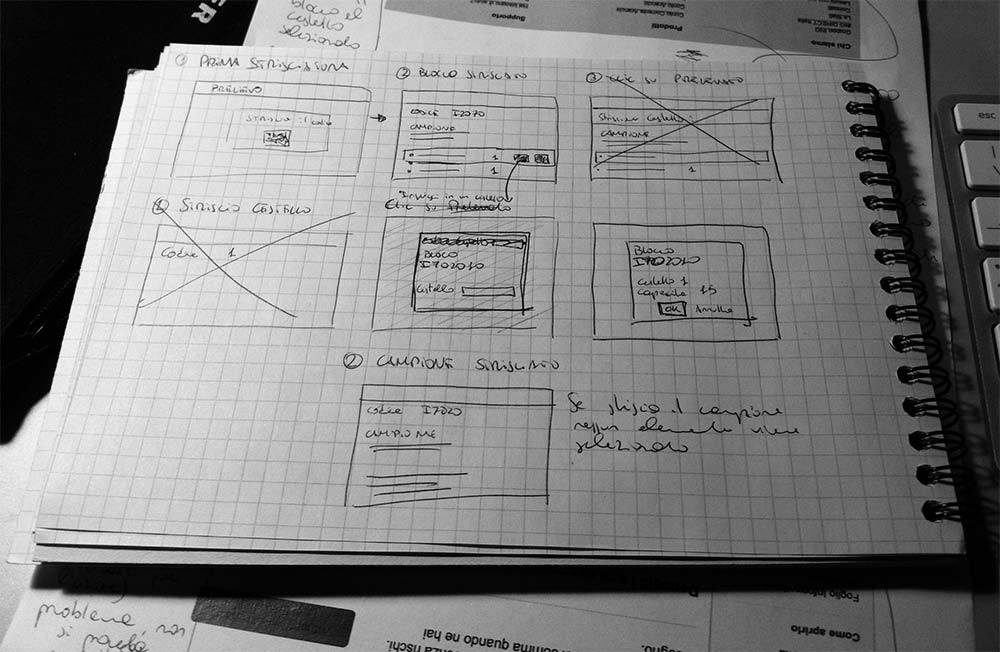
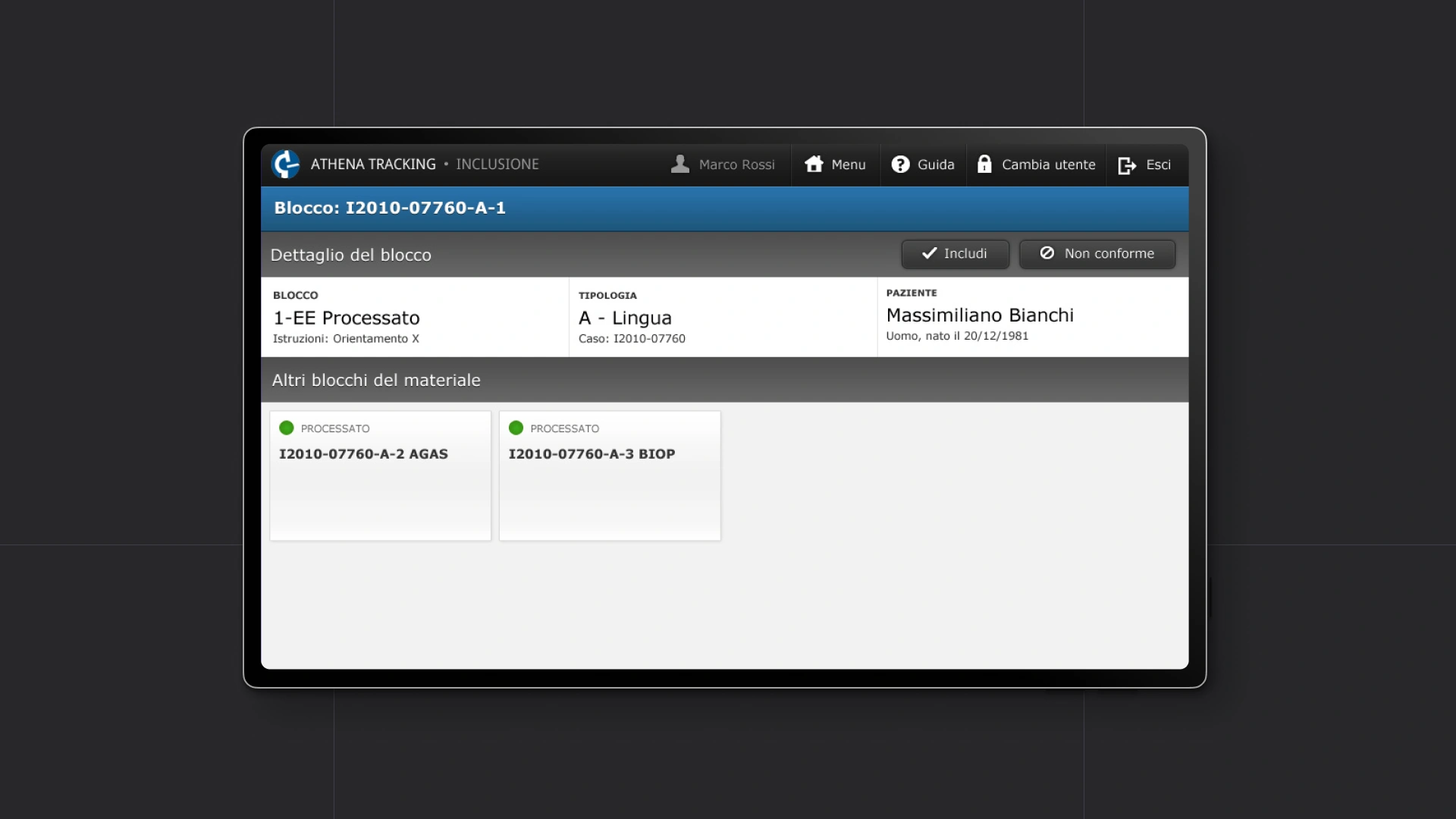
Full Story
A suite of products
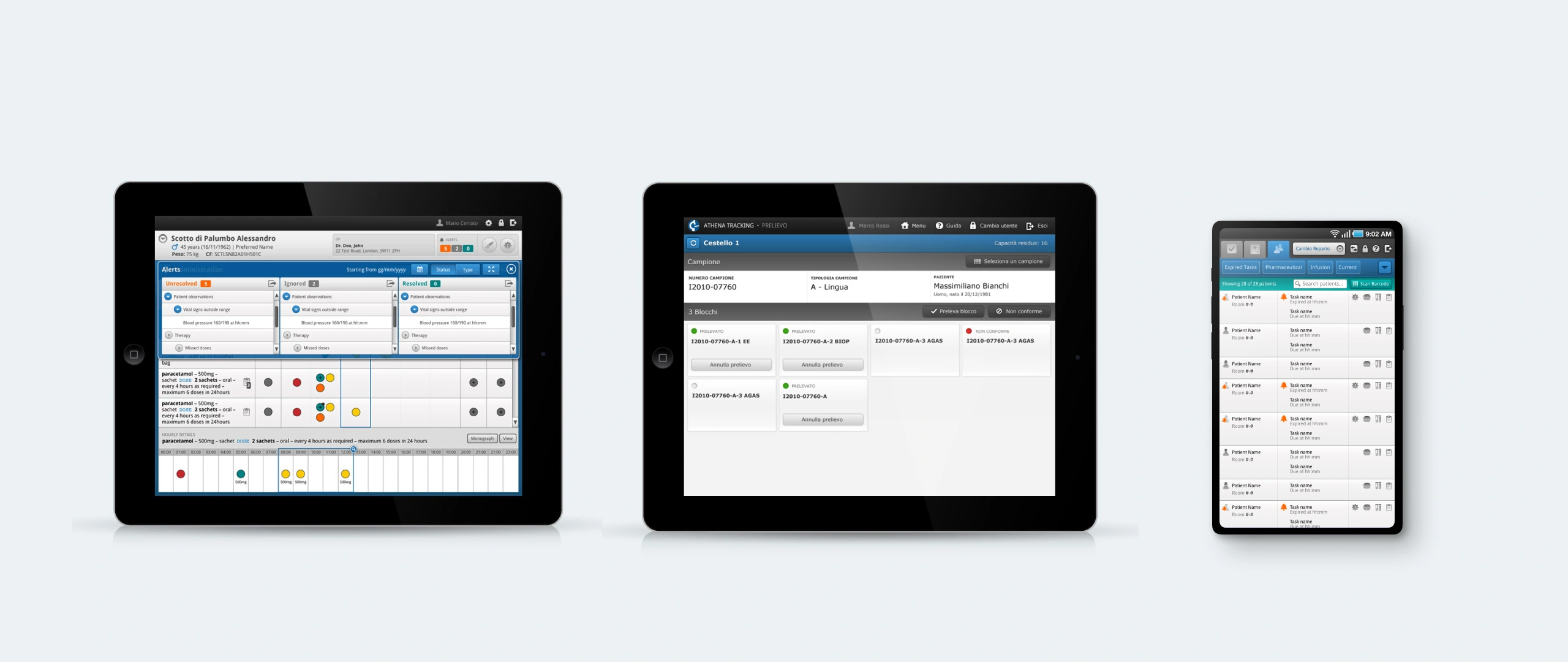
The design was based on real clinical use, not on desktop screens. Because needs change between the ward and the workstation, the mobile apps focused on what mobility helps most: quick checks, alerts, approvals, and updates at the point of care.
Clear information hierarchy guided the UI. Each screen supported one main task, with extra detail available when needed. Readable typography and spacing highlighted critical values, and simple, forgiving interactions helped prevent errors.
Galileo
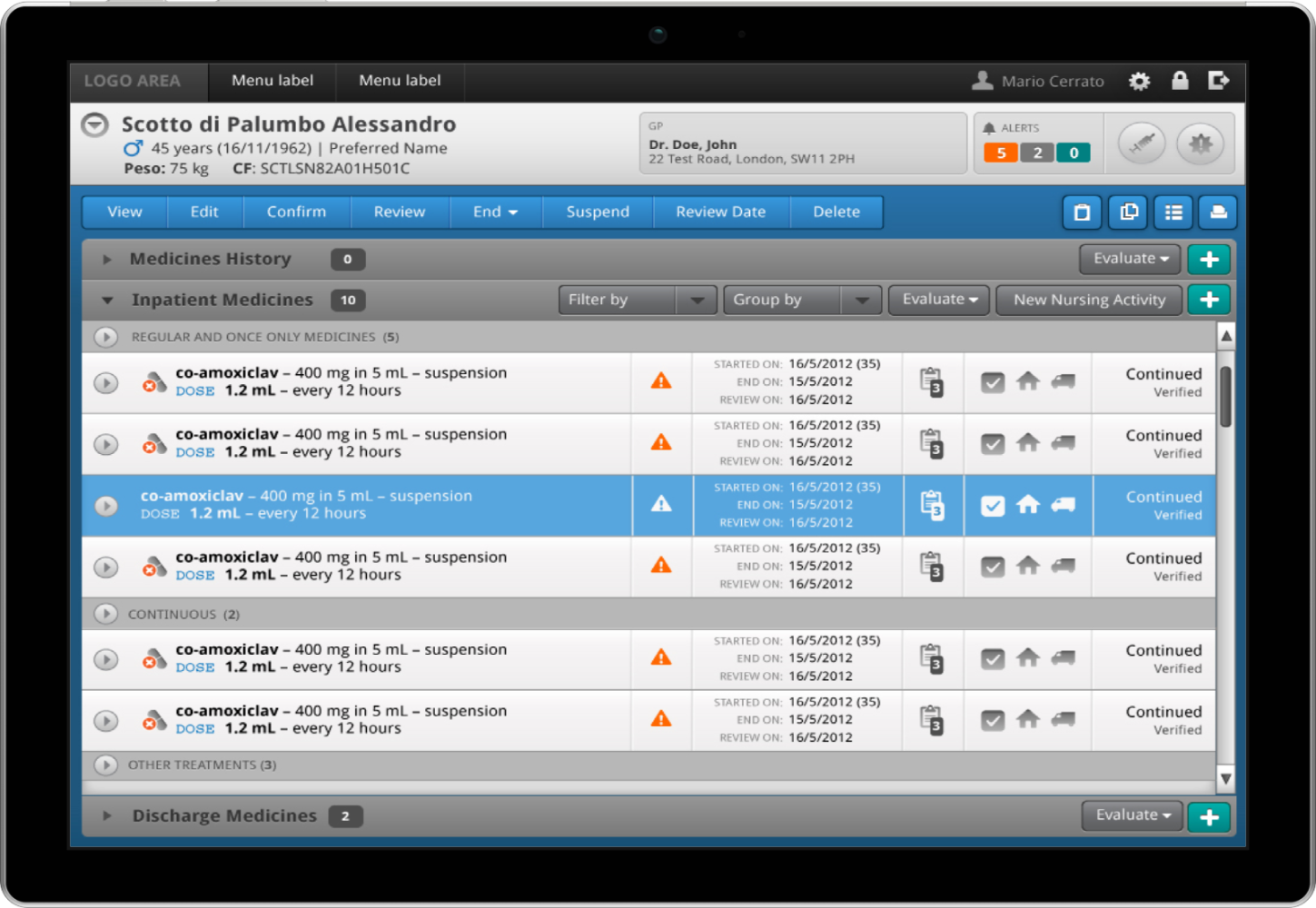
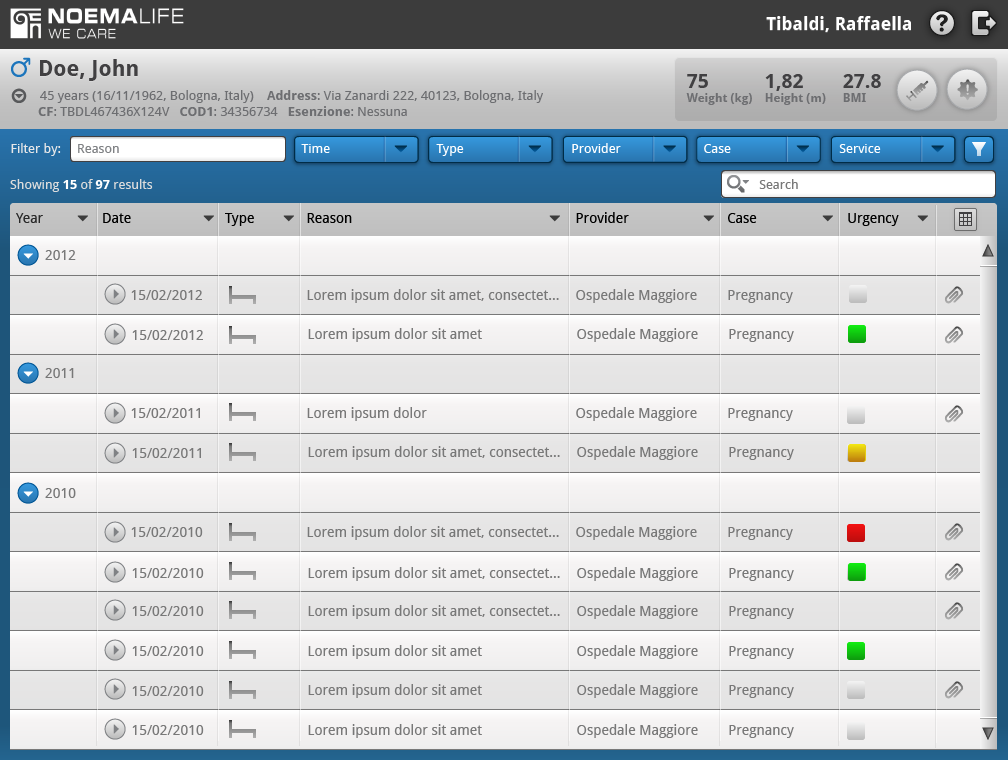
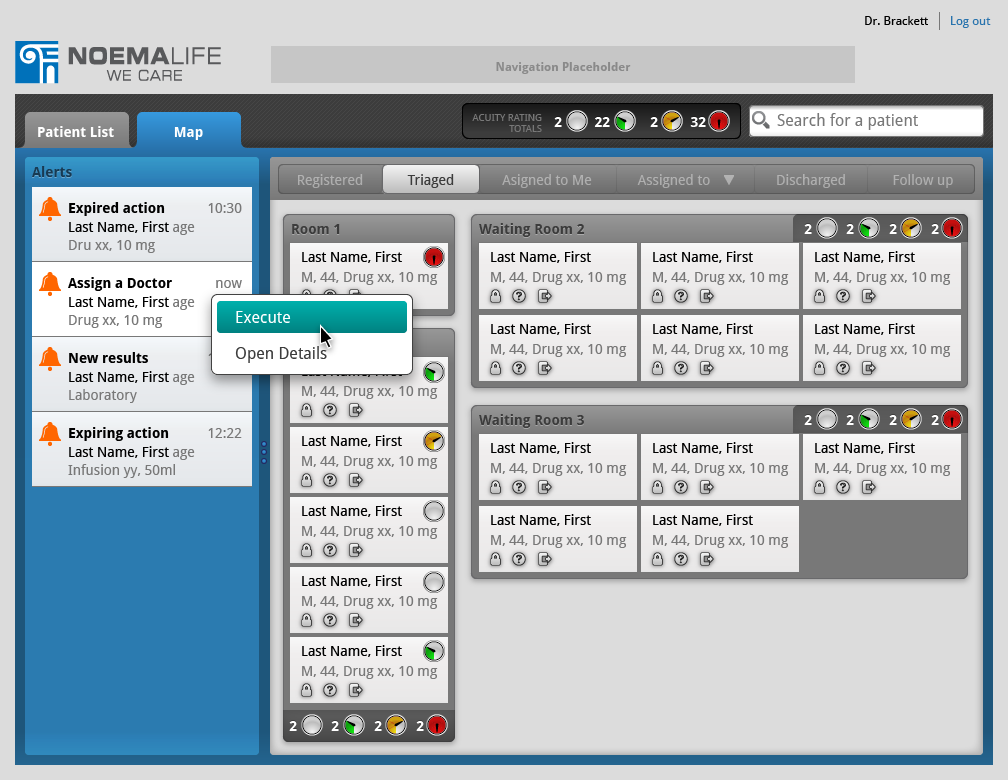
Galileo is hospital software that brings electronic medical records, lab data, and diagnostic exams together into a single digital system. It helps clinicians share information quickly and deliver safer care.
It’s a suite of interconnected applications (or modules) that work together on the same clinical platform. Each department uses the tools it needs — such as apps for the Emergency Department, Radiology, and the Clinical Laboratory — but everything shares the same patient record and data model.
- fewer errors: no information gets lost or recorded incorrectly.
- time savings: nurses and doctors don’t need to hunt down paper files in archives.
I worked on the user experience and interface design for several Galileo features, including:
ePrescribing
Patient Clinical History
ER Management
Athena
Athena Tracking is management software for anatomical pathology laboratories. It helps hospitals manage the full lifecycle of biological tissues—from sampling to diagnosis—and integrates with digital imaging (telepathology).
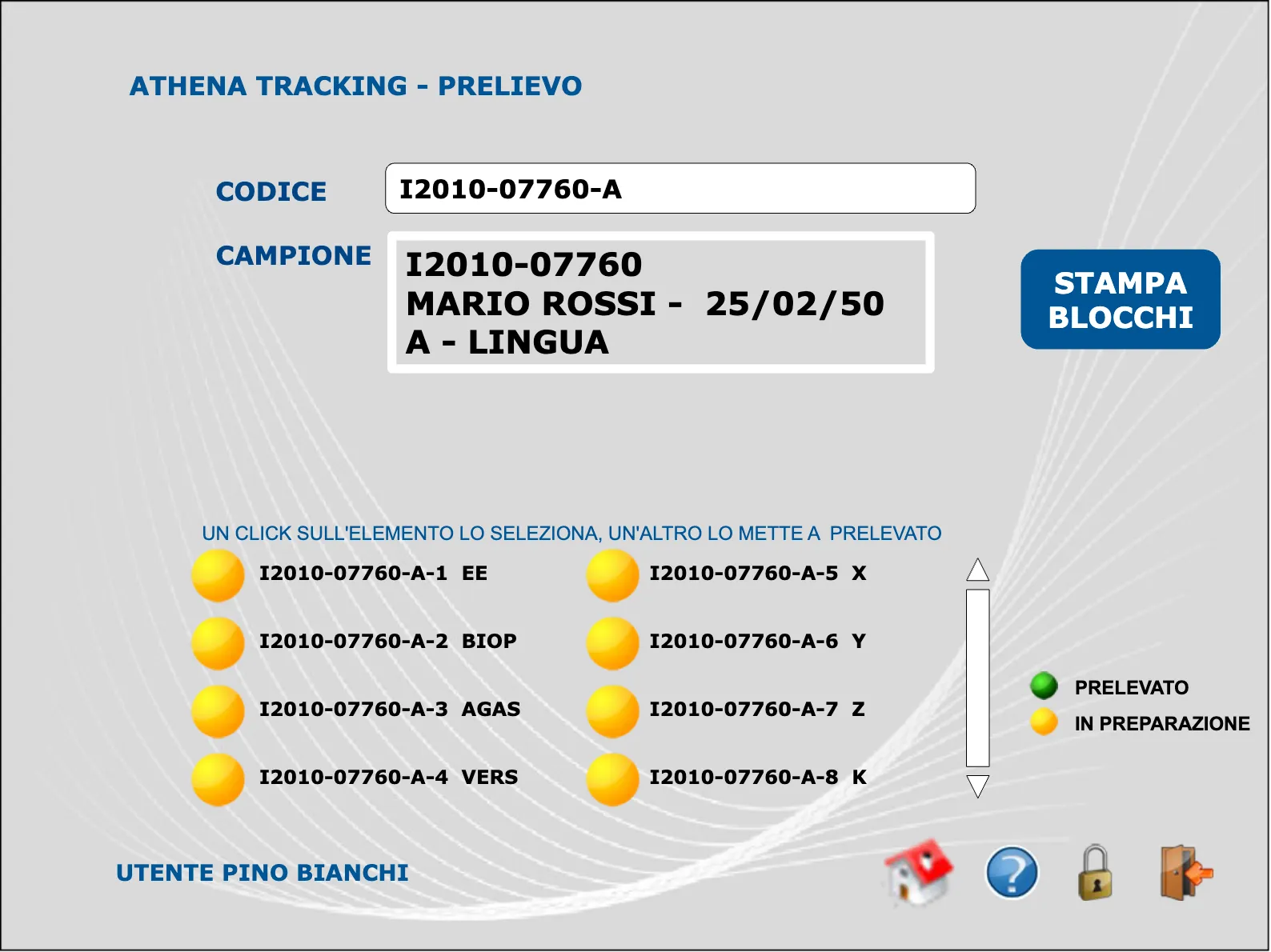
Consistency across a complex product family
Because Noemalife’s mobile apps were built on different clinical systems, consistency was essential. I used the same patterns for navigation, lists, detail screens, and status indicators so clinicians could move between tools without learning a new interface each time.
This also made the apps easier to maintain and extend. Reusable components meant we could add new features and new data without redesigning every screen, keeping the whole product family consistent as it evolved.
Outcomes
Total mobile applications developed
Interactive prototypes created